
A Quick Note on COVID19:
Before diving into the main topic of this month’s post, would first like to express my hope that all my readers and their families are safe and healthy through this uncertain time. The COVID19 virus and recent measures to mitigate its spread have no doubt caused great disruption to everyone’s daily lives, posing a particularly serious existential threat to the elderly as well as people with pre-existing conditions, operating small businesses, and working in the service industry. I leave it to my readers to determine what specific course of action they believe to be most effective, but I hope that we as a community can see this as an opportunity to reach out and assist our neighbors most vulnerable to the situation at hand.
While the issues faced by amateur athletes pale in comparison to those mentioned above, the past few weeks have nevertheless provided a sobering reminder on the importance of distinguishing those things which are and are not in our control. Many of us have been compelled to recalibrate our goals and expectations due to cancelled events and improvise workarounds as gym facilities, pools, and public spaces have shut down and quarantine measures have been put into effect. As for myself, the recent cancellation of high-profile events such as the 2020 Olympics have put into doubt whether the 2020 Kona Ironman World Championship will go ahead this coming October. I nevertheless continue to forge ahead with training so that I may meet the challenge should it still be available to me in 28 weeks. Although a cancellation would most certainly be disappointing, I do not believe that this preparation would be a wasted effort. For one, there are number of challenges and events (the details of which I will provide should a cancellation occur) for which I can certainly leverage the fitness gained. At a very minimum, in-line with what I have experienced over the past three seasons, the training process supplies a structure and daily routine that provide a solid grounding during uncertain times such as these.
Introduction to Training Equipment
Over the next few posts, we will take a detailed look into the equipment I use for both training and racing. For what it is worth, it should be noted up-front that I am not sponsored, and like many other aspects of this journey, my equipment choices have been subject to a great deal of trial and error. As a sample size of one, I can by no means claim that the tools that I highlight are the best available, but simply those that have worked for me. Where possible, I will try to point out alternatives that I am aware of. These caveats aside, I will nevertheless venture to make a few special callouts to both products and people that have had an outsized impact on road to Kona. While triathlon is an individual sport, excelling in it is very much a team effort, and I would like to use this medium as a way to thank those who have made this journey possible.
Those of my readers who are currently in or have completed business school will no doubt be familiar with Peter Drucker’s adage: “you can’t manage what you can’t measure”. In this post, we will explore the tools that I use to track the metrics we have explored in previous posts, which are then used to inform and optimize my training load.
General Training Management
- TrainingPeaks: As I have alluded to in several previous posts, over the past few years, I have extensively used TrainingPeaks as my hub for training data collection and analysis. TrainingPeaks is a cloud-based software platform which provides several features that I have found incredibly useful:
- Calendar: This feature enables both coaches and athletes to schedule and upload workouts, enabling more precise season planning and enforcing greater training compliance.

- Workout Analysis: This feature enables both coaches and athletes to get very deep in the weeds on the metrics recorded for each individual workout, allowing them to assess whether key benchmarks have been met and the goals of the workout have been achieved.

- Performance Management Chart (“PMC”): As outlined in post #5, by collecting the cumulative data of all training sessions, TrainingPeaks is able to calculate one’s training stress score (“TSS”), chronic training load (“CTL”, or fitness), acute training load (“ATL” or fatigue), and training stress balance (“TSB” or form). Taken together, these metrics are incredibly useful for tracking the progress of one’s training and knowing when it is appropriate to back off the overall load via rest days and/or recovery weeks.
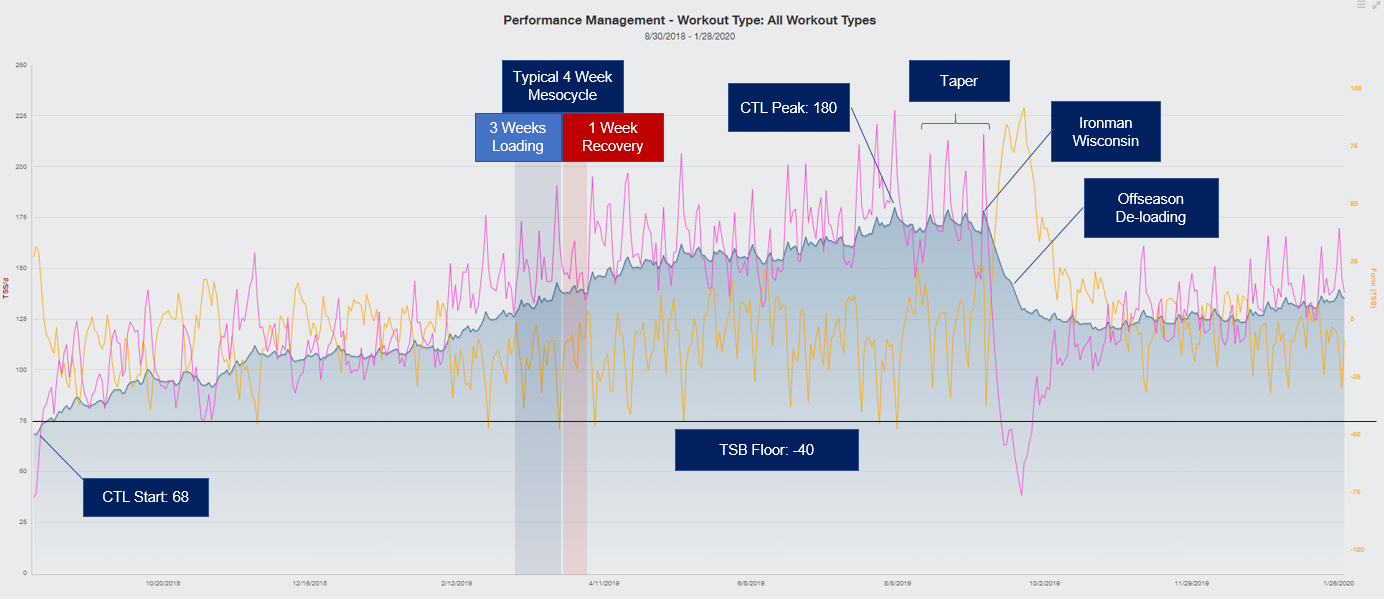
- Calendar: This feature enables both coaches and athletes to schedule and upload workouts, enabling more precise season planning and enforcing greater training compliance.
While TrainingPeaks is the software most commonly used by triathletes, viable alternatives in the market with similar feature sets include Golden Cheetah, Xert, and Today’s Plan.
- Fitness Watch / Tracker: Arguably a triathlete’s best friend, a fitness watch enables athletes to record relevant data across all three sports via either the watch itself or connections to third-party devices. This can then be displayed to the athlete in real-time for in-workout and race-day decision-making and saved down for later analysis through software such as TrainingPeaks. The data recorded depends on the sport, a sample of which is provided below:
- Swimming: split times, heart rate, stroke rate
- Cycling: power, cadence, heart rate, speed
- Running: speed, heart rate, cadence
In addition to workout data, if worn throughout the day, fitness watches are also useful for tracking general health metrics like resting heart rate, heart rate variability, sleep quantity and quality, SPO2, etc. The most common devices used by triathletes are produced by Garmin, Polar, and Suunto. I have personally used the Garmin Fenix 5S (an older model) for the past 2 seasons.

Swim Tools
Of the three sports, swimming remains perhaps the least affected by recent advances in fitness technology when it comes to everyday training. Indeed, most competent swimmers rely solely on the most analog of devices to keep track of their split times: the pool-side clock. That being said, fitness watches (see above) can supplement this by recording split times as well as additional data fields such as stroke and heart rate for later analysis. However, one can generally only view these metrics at the end of each set given the difficulty of checking one’s watch underwater. While HUD-based devices are currently being tested and rolled out, such products have not yet reached full maturity.

- SwimLabs: Given the technical nature of swimming, perhaps the biggest gamechanger to my swim performance over the past season has been the decision to work on my stroke with SwimLabs. SwimLabs maintains an extensive network of coaches and locations throughout the US that provide technical instruction informed by 360-degree video analysis and software that allows side-by-side comparison against world-class professionals as well personal technique changes over time. All this takes place in endless pools (think swim treadmills) with mirrors placed at multiple angles to allow swimmers to better understand prescribed changes to their stroke. While many coaches do offer video stroke analysis, SwimLabs is the only setup that I am aware of that allows for on-the-spot, real-time feedback, which greatly reduces the trial-and-error process of traditional coaching. I would like to provide a special call-out to Coach Joe Eiden at the Westchester, New York location, whose guidance has been instrumental in knocking off 10 seconds from my 100 yard swim time over the course of 3 months (nearly 7 minutes over the course of an Ironman!).
- Swim Smooth: Whether it be prescribed directly by a coach, one’s local masters swim squad, or one of the many online platforms, there exists a wide variety of swim training plans geared toward triathletes. Having tried multiple other curricula over the past few years, I recently made the switch to Paul Newsome’s Swim Smooth online program for this season. The reasons for this switch were the program’s ability to dynamically adjust one’s drills and sets based on technical faults identified by my work with SwimLabs, as well as its extensive library of video instruction on the execution of and the purpose behind said drills.

Bike Tools
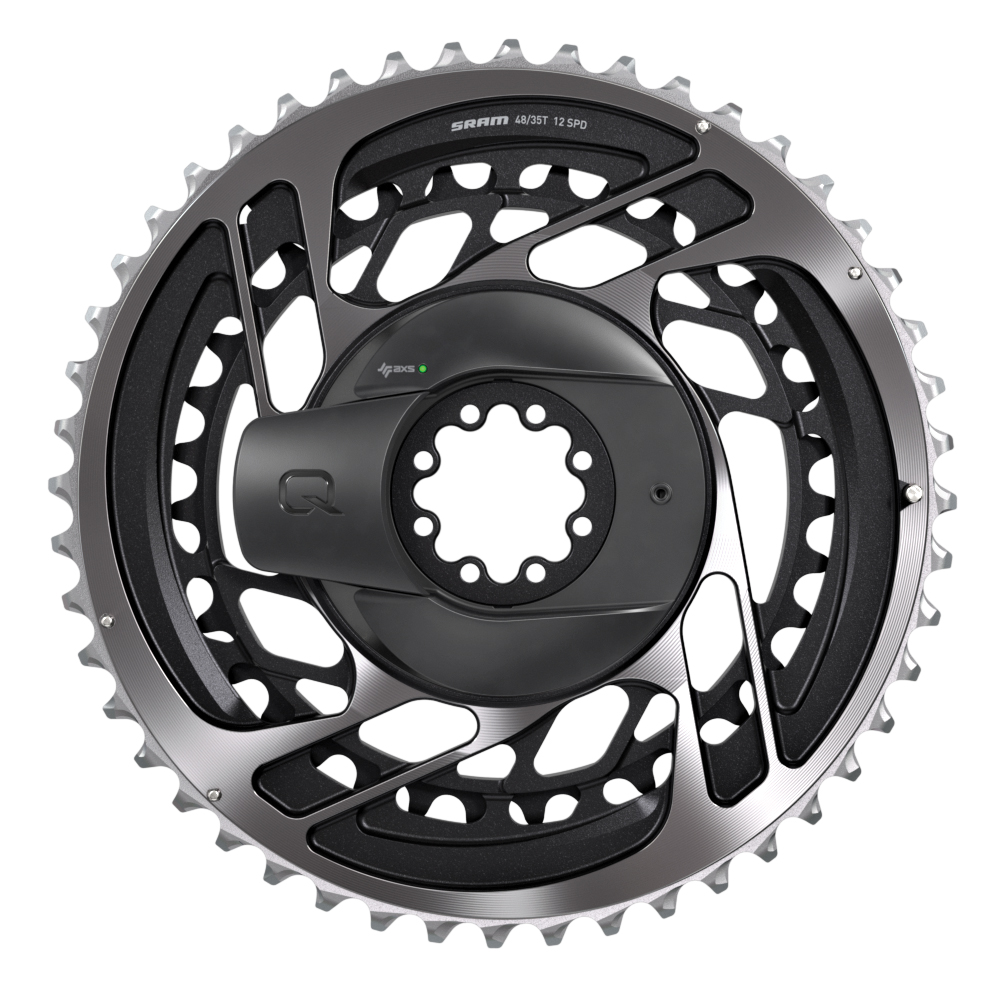
- Power Meter: A strong case can be made that power meters have fundamentally changed the sport of cycling over the past few decades. Through the use of strain gauges, a power meter enables riders to measure their effective energy output, which unlike other metrics such as heart rate or speed, is unaffected by extraneous factors such as heat, humidity, altitude, terrain, sickness, etc. This in turn has allowed both coaches and riders to more precisely calibrate training sessions to target specific training zones (see post #4) as well as gauge their pacing during races. Power meters can take a wide variety of forms depending on their placement on a bike’s drivetrain, including but not limited to the pedals, crank arms, chainring spider, and wheel hub. I personally use Quarq’s DZero power meter, which is integrated into the chainring spider and well known for its reliability and light weight.
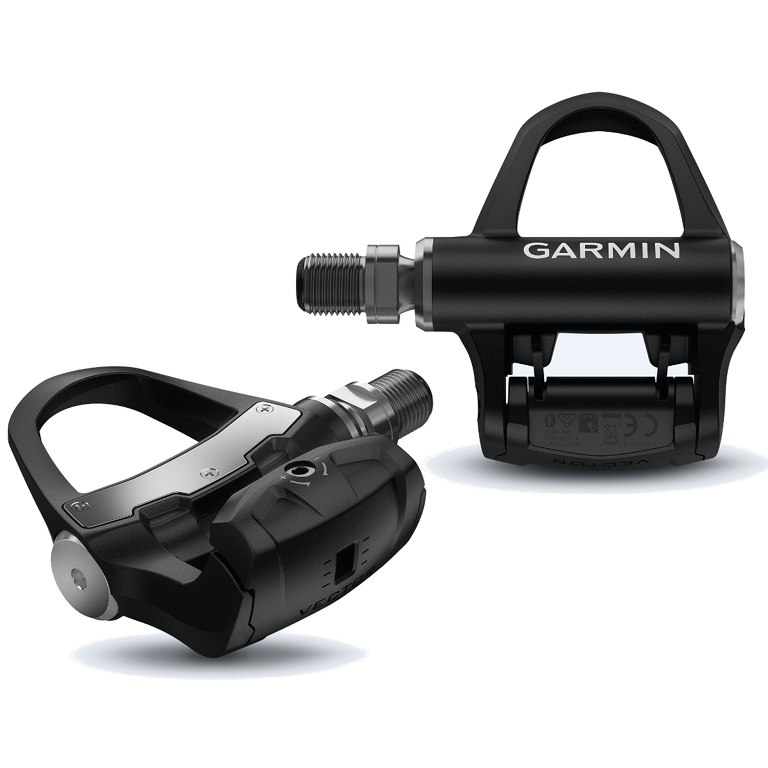


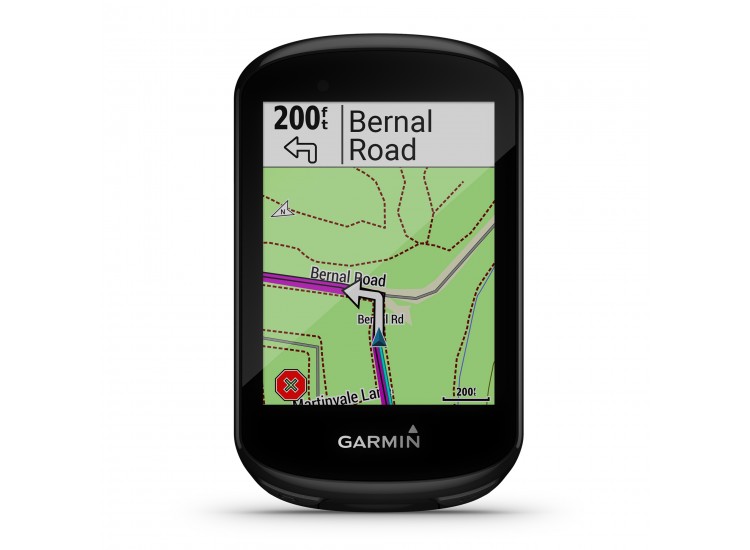
- Head Unit: While some triathletes utilize their watch to display their cycling data, many choose to have this data displayed on a dedicated bike computer attached to their handlebars due to the greater safety it provides by being in the rider’s direct line-of-sight. Higher-end units also have additional features such as maps, GPS guidance, as well as automatic SOS in the unfortunate event of a crash. The two heavyweights in this space are Garmin and Wahoo, and I have been using a Garmin Edge 830 for the past two seasons.
- TrainerRoad: As mentioned with swimming, whether prescribed directly by a coach or one of the many online platforms, there exists a litany of cycling training plans available for triathletes to follow. While primarily geared as a training platform for cyclists, TrainerRoad has served as the foundation of my overall Ironman training strategy for the past two seasons. In addition to providing an extensive library of swim, bike, and run workouts and training plans, TrainerRoad also maintains a strong written and podcast content base that educates its users on the fundamentals and scientific principles of its training approach. Indeed, a great amount of the knowledge that I have shared on this blog was in some degree learned from TrainerRoad or one of the many empirical studies it directed me towards. I would like to make a special callout to coach Chad, Jonathan, and Nate and the TrainerRoad team by stating that it is no exaggeration that my subscription to TrainerRoad may be the greatest return on money and effort spent from a performance gain perspective in the sport, having increased my functional threshold power from a baseline of 260 watts two years ago to 296 watts today (a 14% increase to-date and still rising!).

- Zwift: Traditionally seen as a winter-specific activity, indoor bike training has taken on a newfound importance in recent months given the current climate of mandated quarantines and calls for social-distancing in the fight against COVID19. To combat the boredom normally associated with pedaling in place, over the past few seasons, I have extensively utilized Zwift, which is a computer program that provides a variety of immersive virtual courses where cyclists can train. Zwift also has a number of social features which enable athletes to organize group rides with their friends as well as races with fellow competitors worldwide. As of March 2019, Zwift has over 1 million subscribers around the world.

To incentivize greater participation, Zwift has also “gamified” the training experience by setting up a virtual currency within the platform which users can earn through the accumulation of mileage and unlocking various achievements (e.g. winning races). This currency can then be used to purchase virtual gear and outfits. I am personally proud to say that after logging over 10,000 miles on Zwift, I have finally unlocked the exact bike setup that I intend to use at Kona (more on this in a subsequent post).
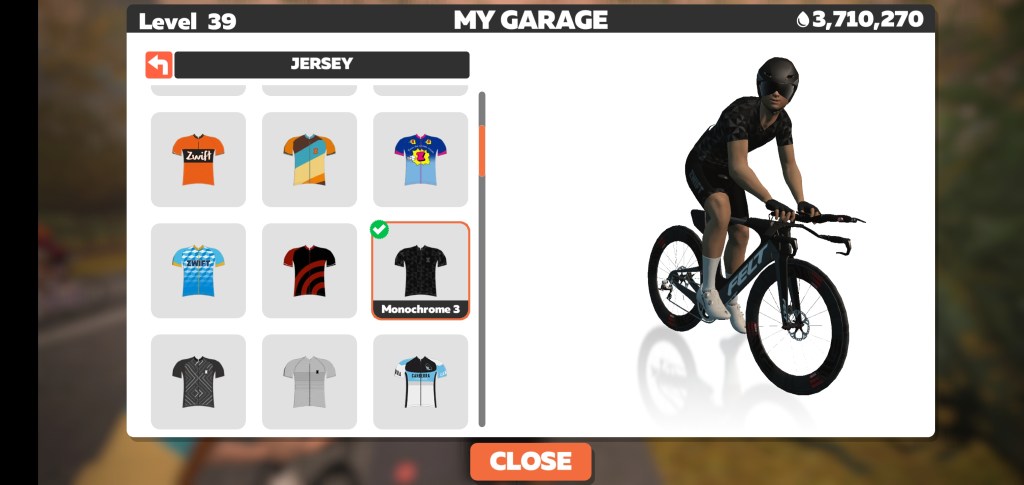
It should be noted that Zwift is not the only virtual cycling platform. Other products available in the market include TheSufferFest, Rouvy, BKool, and FulGaz.
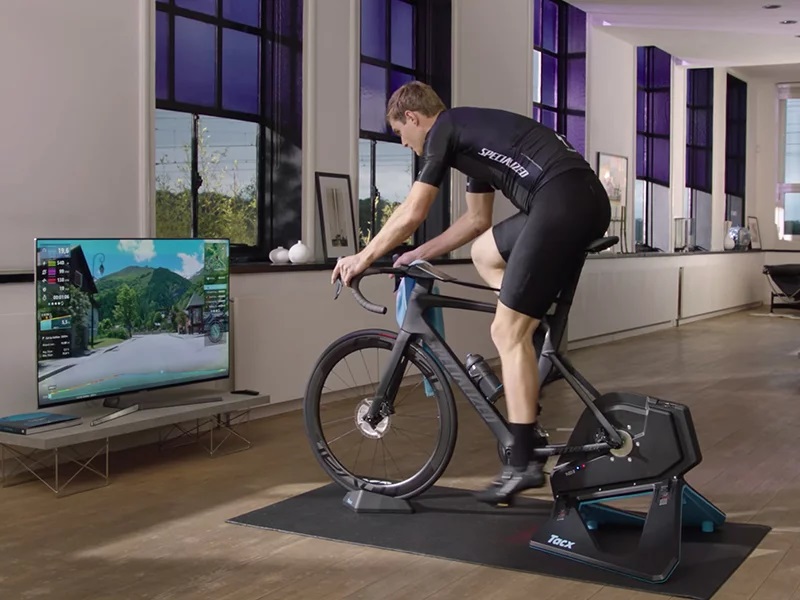
- Indoor Bike Trainer: In order to participate on virtual courses such as those provided by Zwift, one generally needs to use an indoor bike trainer, which either comes as a standalone unit or a bolt-on to one’s outdoor bike setup. Higher-end “smart” trainers are able to add additional immersive elements such as grade changes (e.g. climbing a 10% grade hill in Zwift results in the trainer automatically adding resistance) or road surface simulation. There are a large number of products available on the market, but I personally use the Tacx Neo 2 given its power accuracy and lack of need to calibrate before and after every ride.
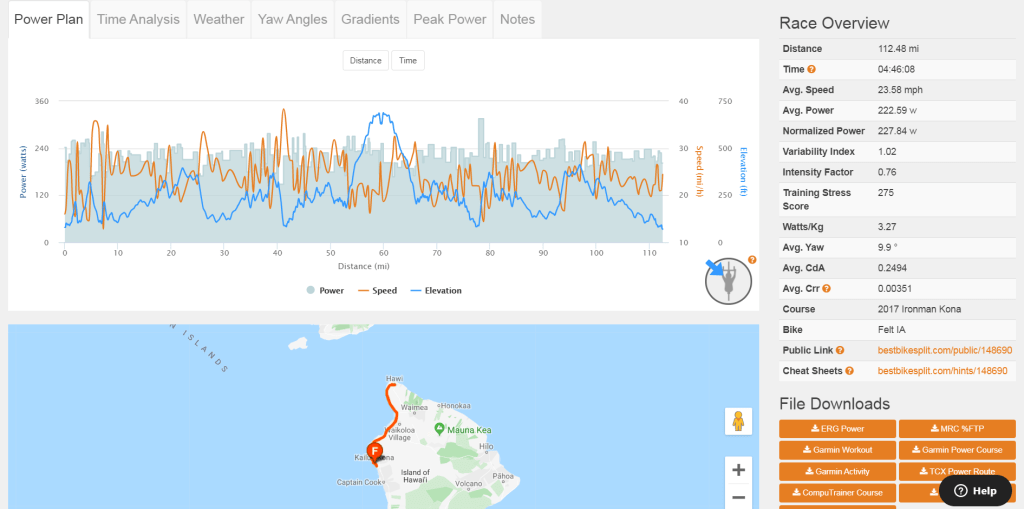
- BestBikeSplit: Over the past 2 seasons, I have used BestBikeSplit to help formulate my race-day pacing strategy. BestBikeSplit’s online algorithm combines GPS, topological, and historical weather data, along with athlete inputs such as one’s functional threshold power, drag coefficient, and total bike setup weight to yield an optimized power target over various sections of a course. I have used this tool to great success at both Ironman Lake Placid and Wisconsin, at which my race-day bike splits were within 5 minutes of what BestBikeSplit predicted.
Run Tools
Compared to all other sports, running is elegant in its simplicity, requiring no special equipment or facilities for people to participate (run minimalists would argue that even sneakers are optional!). That being said, fitness watches (see above) can greatly enhance the quality of workouts by recording and displaying in real time metrics such as one’s speed, heart rate, and cadence, thus ensuring better compliance to what has been prescribed for the day. However, I have sometimes found that the GPS data that fitness watches rely upon can sometimes be unreliable when running in the deep woods, near tall buildings, and in the presence of a large number of mobile devices. For this reason, I often use a footpod, which utilizes accelerometers to obtain more consistent speed and distance data and can also be used in indoor settings such as tracks and treadmills. I personally use the Stryd pod, which also measures one’s running “power”, although the I do not utilize that feature as a scientific consensus has not been achieved on it. Similar products are also produced by Garmin, Nike, and Polar.

In my next post, we will dive into the equipment that I plan to use on race day. In the meantime, for those of you who would like to follow my training progress, most of my sets can be found on my Strava account at: https://www.strava.com/athletes/15134014.
#dacakeisalie
 KonaKorgi
2 thoughts on “Entry 7: Equipment Part 1, Training Tools”